
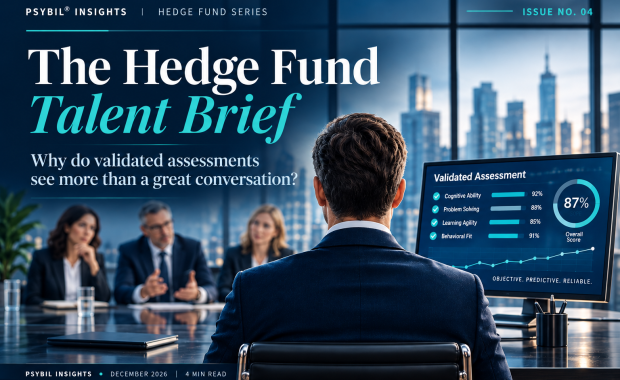
Two candidates for the same PM seat can sit through two completely different interviews and never know it. Issue No. 04 explains why unstructured interviews add noise to senior hiring, and how pairing a structured interview with a cognitive test raises the odds of an above-average hire to 8 in 10.
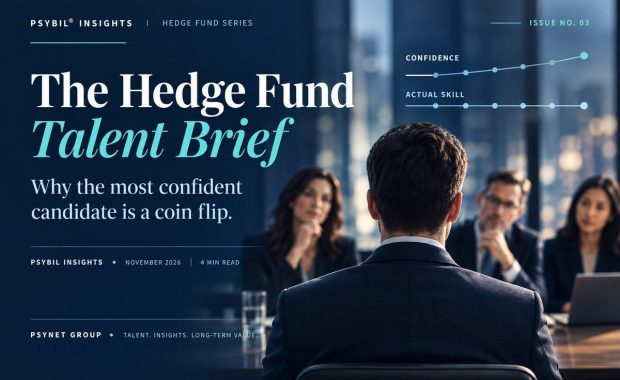
The Hedge Fund Talent Brief: Why the most confident candidate is a coin flip
The candidate who sounds most certain is rarely the most skilled. Here’s why confidence wins the interview room, and what your hiring process should test for instead.

A Value-Add that Differentiates You
Even the best recruiters still miss, because many senior candidates interview better than they perform, and a Heidrick & Struggles study found that 40% of executive hires were gone within 18 months. Dr. Dave Popple of Psynet Group explains why final-round interviews fall short and how a Psybil partnership helps recruiting firms make their placements hold.
The Hedge Fund Talent Brief: Why a track record alone doesn’t travel
When bankers move into a portfolio manager seat, 7 in 10 survive the transition. Only 4 of those 7 perform well enough to keep the job. Every one of them passed due diligence. A strong track record blends skill, market regime and luck, and most hiring processes never separate the three. This issue explains how to tell which one you’re actually hiring.

The Nice Trap: Rethinking Warmth in Hospital Leadership
Two studies say agreeable leaders perform better. A third says the same trait costs them a decade of raises. Both are true, and the gap between them is where hospital leadership lives.
The Hedge Fund Talent Brief: Which Hiring Practices Pay Off Over Time?
Every fund can price market risk to the basis point, but pricing the risk of a poor PM hire is harder and often undervalued. Here are three things selection science says about the PM seat that most interview processes still miss.