
To read the original article, please visit the Wall Street Journal website: https://www.wsj.com/finance/investing/hedge-funds-call-this-psychologist-when-their-traders-start-losing-663a08da
Dave Popple is tasked with finding who can cut it for hypercompetitive multimanager funds
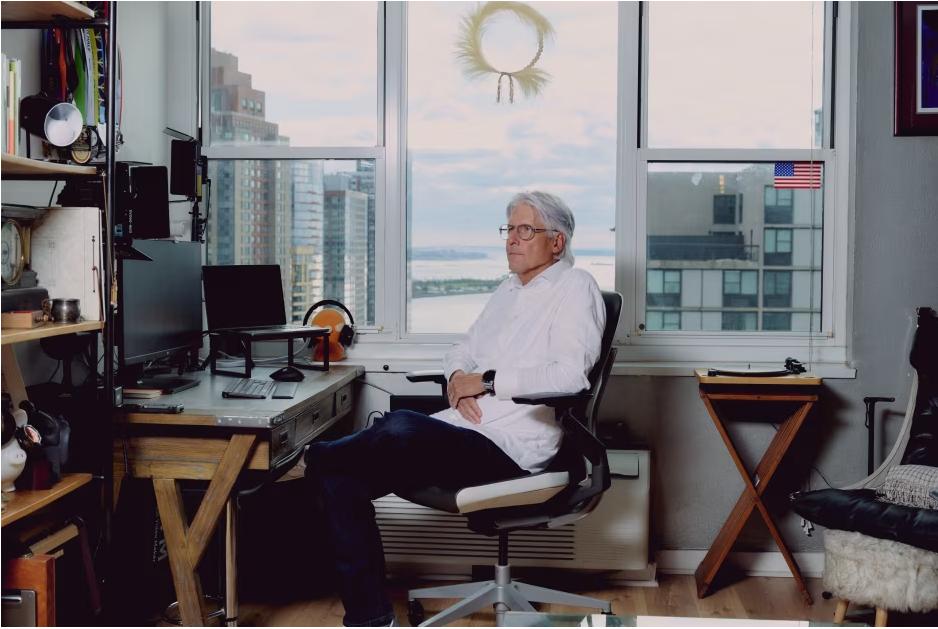
The biggest hedge funds fuel competition—against one another, but also inside their own shops.
That’s why they also employ people like Dave Popple.
Popple, a 59-year-old psychologist, is hired by top trading firms to assess senior recruits and weed out those unlikely to thrive in these pressure-cooker environments. He also helps existing traders improve their performance and address their anxieties—a way to improve employee retention and results.
He focuses on “multimanager” hedge funds—also known as “pod shops” — sprawling enterprises made up of semiautonomous trading teams that have come to dominate Wall Street.
They are the biggest funds, names like Citadel, Millennium and Point72, and their short-term nature creates unique burdens even in the hyper-stress world of trading.
Inside these pod shops, traders—usually 35 to 45 years old—are tasked with predicting short-term moves in various investments. Many are judged on a weekly, or even daily, basis and losses are barely tolerated. Just a 5% loss can lead to a reduction in the cash they manage, while several months of poor performance can result in a firing.
Stocks have been climbing but worries of an artificial-intelligence bubble, President Trump’s next moves, and other concerns leave traders as anxious as ever.
When performance starts to slip, traders sometimes start to spiral.
“They have dark circles under their eyes,” he says, a sign that stress is building. “They internalize failure.”
One trader wouldn’t allow himself to eat sushi—his favorite food—as punishment for three days of losses.
“He didn’t think he deserved it,” Popple says.
Popple is tasked with getting them back on track. He tells clients that they need to separate trading performance from their view of their self-worth.
One strategy is asking what advice they would give a hypothetical subordinate dealing with losses.
Usually, Popple says, the traders realize that setbacks reflect market moves, not a trader’s skill. The doctor’s follow-up: “Why aren’t you applying those standards to yourself?”
“That’s the ‘Aha’ moment,” he says. “It ends up being more therapy than coaching .”
Portfolio-manager coaching and psychology isn’t a new field. Years ago, hedge-fund managers,including Julian Robertson and Steve Cohen, hired in-house therapists, including Dr. Aaron Stern, an expert in narcissistic personality disorder. He is seen as a model for Wendy Rhoades, the character in the Showtime series “Billions.”
In the past, some funds administered Rorschach tests, asking prospective recruits to assess ink blots, aiming to measure their ability to manage complexity. The test took over an hour, though, and some traders lost patience along the way.
The rise of pod shops has created new demand.
Portfolio managers at these firms usually lead small teams of several subordinates. That builds camaraderie among team members but leaves these traders alienated and in vicious competition with others, even those at their own firms.
“They definitely don’t talk to a supervisor if something is going wrong,” Popple says, since they areworried about being compared with better-performing colleagues.Popple grew up in Eau Claire, a midsize city in Wisconsin. After college, he worked with a youth minister. He earned his Ph.D. and then focused on victims of trauma, including war veterans, child-abuse survivors and men abused by priests as children.
“I really thought I should be saving the world,” he says.
When a friend asked for help addressing discord among staffers at a telecom company, Popple decided it might be enjoyable working with businesspeople. At the age of 40, he shifted to working with stressed-out traders and determining who can make it inside Wall Street’s pods.
Popple says he and others often detect those who aren’t cut out for these jobs, though they sometimes get it wrong.
Rivals sometimes embrace unorthodox approaches, Popple says, conducting hourslong interview sessions that can include questions aimed at unnerving candidates — What was your kindergarten report card like? How old were you when you stopped wetting your bed?
Popple tries to detect how candidates will handle market volatility, asking how long they tend to dwell on big losses. He wants to find out if they are only in it for the money, which he doesn’t think leads to a top performer.He tries to measure “lateral thinking and processing speed, ” he says, traits that can lead to strong gains.
Over the years, Popple has learned a lot about top hedge-fund traders. The best investors are hyper-disciplined—one client persuaded his gym to share keys to its facility, so he could work out at 3 a.m. before a business trip.
This discipline can help them maintain an investing approach amid turbulent markets.
“They are the rare overlap of leaky attention, which allows them to pick up signals others miss, and strong discipline and willpower,” Popple says.
Top clients often don’t have enormous egos and battle deep insecurities—reflective of the fact that the best investor gets it wrong nearly 50% of the time.
They are super-competitive but it isn’t about acquiring material possessions, he has found.
“That was counterintuitive,” Popple says. “It’s all about the score and winning—they want to accomplish more and more and more.”
Top traders are generally no happier than the general populace, he says, citing data from various studies. But they can be ahead of others at realizing that deep satisfaction comes from building acloseness with spouses and children.
“They prioritize their relationships at levels not seen in other industries,” he says.
To read the original article, please visit the Wall Street Journal website: https://www.wsj.com/finance/investing/hedge-funds-call-this-psychologist-when-their-traders-start-losing-663a08da